
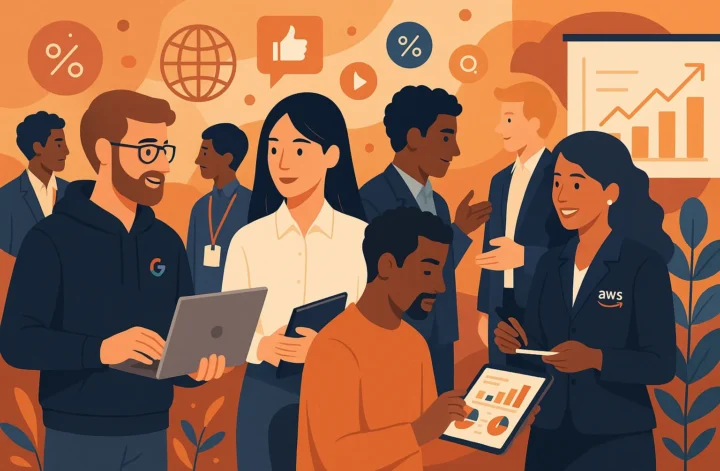
The Energy of Global Innovation Under One Roof
Attending a global tech conference is unlike any other professional experience. The moment you walk through the venue doors, you’re immediately immersed in an environment buzzing with ambition, ideas, and groundbreaking technologies. There’s a distinct energy in the air—a sense that something important is happening here. Something that you’re part of.
Thousands of professionals from around the world—developers, engineers, product managers, startup founders, and thought leaders—come together for one purpose: to connect, to learn, and to build the future. It’s more than just keynotes and demos. It’s about stepping into a global community driven by shared curiosity and an obsession with innovation.
From the very first session, I realized that this wasn’t going to be a passive experience. It was an active exchange. Every conversation, every panel discussion, and every impromptu hallway chat was a moment to absorb new knowledge or share your own insights. And that’s where the magic lies.
Exposure to Cutting-Edge Technologies
One of the most valuable aspects of attending a global tech conference is the first-hand exposure to emerging technologies. Seeing live demos of concepts I had only read about—quantum computing frameworks, AI-powered medical imaging, zero-trust security models—completely changed my perspective on what’s technically possible today.
In just a few hours, I witnessed innovations across domains:
- Blockchain used to verify supply chain integrity in developing countries.
- Edge computing enabling near-instant AR rendering in mobile gaming.
- Green cloud infrastructures designed to cut carbon output by 40% for large enterprises.
What struck me most wasn’t just the complexity of these technologies—it was their practicality. These weren’t just research papers or whiteboard theories. These were live solutions already shaping the real world. It reminded me how quickly things evolve in tech, and how important it is to stay connected to the forefront.
Learning from the Best in the Industry
Workshops and masterclasses at the conference allowed me to learn directly from industry veterans. I attended sessions led by engineers from companies like Google, AWS, OpenAI, and GitHub—people whose products I use every day. And while their credentials were impressive, what stood out most was their generosity with knowledge.
In one session on developer tooling, a senior engineer walked through their team’s internal code review culture. The way they structured feedback loops, prioritized documentation, and automated release notes gave me practical tactics I could apply to my own workflows.
In another panel on scaling microservices, a CTO shared how their team navigated breaking a monolith—challenges, mistakes, and the lessons that came with it. Hearing real, unfiltered stories from people who had “been there” provided insights no blog post or YouTube tutorial ever could.
These conversations weren’t just inspiring—they were instructive.
The Unexpected Power of Serendipitous Networking
When you attend a tech conference, you expect to sit in on talks, maybe collect a few business cards, and walk away with some fresh ideas. What I didn’t expect was how powerful the informal interactions would be. Waiting in line for coffee, sitting beside someone at a demo table, or chatting during a break turned out to be some of the most meaningful moments of the whole event.
I met a founder from Denmark working on decentralized identity, a machine learning researcher from Brazil, and a product designer from Japan—each working on different problems, but all passionate about solving real-world challenges with technology.
What bonded us wasn’t just tech—it was the willingness to exchange ideas, ask questions, and challenge assumptions. We compared notes on design trends, shared our tech stacks, and even brainstormed ways to collaborate post-conference.
By the end of the event, I had built not just a contact list—but a genuine support network of like-minded professionals across multiple countries. These are people I’m still in touch with, who now share resources, feedback, and insights that help me grow.
Reigniting Passion for My Own Work
Before the conference, I was stuck in what I’d call a creative plateau. I had ideas, but I lacked direction. I was delivering work, but without much inspiration. The global conference flipped a switch in me.
Something about being surrounded by innovators, being part of a live audience reacting to world-changing keynotes, and hearing stories of persistence and breakthrough—it reminded me why I chose this field in the first place.
I returned with not just new skills, but a new mindset. I started looking at problems from different angles. I re-evaluated some old assumptions about how I was building products. I was more curious, more motivated, and more connected to the “why” behind my work.
That renewed energy also rippled into my team. Sharing takeaways, demoing new tools, and starting new experiments brought a wave of freshness to our daily routines.
Turning Insights Into Action Back Home
Returning from the conference, I made it a priority not to let the experience fade into a distant memory. Inspiration without implementation is short-lived, so I set a clear goal: turn at least three learnings into tangible changes within the first month.
I started with a team knowledge session. I condensed the most valuable insights into a short presentation—highlighting trends, tools, and techniques that directly related to our work. From AI-enhanced automation tips to simple UI optimization tricks, the response was incredibly positive. It sparked questions, debate, and even a few pilot projects.
Next, I proposed a small experiment: incorporating a new open-source DevOps tool introduced at one of the booths. Within two weeks, our deployment time was reduced by 40%, and team morale rose simply because something “from the outside world” had refreshed our routine.
The third implementation was more strategic. I used insights from sessions on scaling infrastructure and brought a proposal to leadership for long-term system improvements. It sparked conversations we had been avoiding—discussions about growth, sustainability, and modernization. The conference gave me the vocabulary and confidence to drive those talks forward.
Shifting Perspectives on Global Tech Culture
Before attending, I viewed tech through a relatively narrow lens—based mostly on my regional ecosystem. But hearing stories and seeing projects from around the world reframed everything. It reminded me that technology is truly borderless, and creativity doesn’t have a timezone.
I was especially struck by how emerging markets are using technology not just to solve business problems, but to leapfrog infrastructure gaps. I met developers creating mobile-first banking solutions for rural areas without internet access. I saw education platforms designed specifically for regions with power outages, leveraging offline sync and SMS delivery.
This broadened my understanding of impact. It’s easy to get wrapped up in industry trends or shiny new frameworks, but real innovation often happens where the constraints are the greatest.
That realization also made me reflect on how inclusive or exclusive our tools, platforms, and documentation really are. It made me more empathetic as a builder—more mindful about accessibility, translation, bandwidth needs, and user context. Technology should be empowering for everyone, and attending this conference made that more than just a slogan. It made it personal.
Lessons in Personal and Professional Growth
One of the unexpected benefits of attending a global conference was the boost in personal growth. For a few days, I was constantly outside my comfort zone—striking up conversations with strangers, speaking up in workshops, absorbing hours of new information. It stretched my confidence in ways that books and online courses never could.
I also became more reflective. Seeing so many smart, driven people at different stages of their careers helped me assess my own goals. I asked myself:
- Am I building things that really matter?
- Am I keeping up with the pace of change—or falling into routines?
- How can I expand my impact beyond just my day job?
That internal dialogue led to journaling, new side projects, and reaching out to mentors and peers with renewed curiosity. It wasn’t just about what I learned—but who I became after experiencing it.
Building Relationships That Go Beyond the Event
Perhaps the most valuable long-term takeaway wasn’t a session, a tool, or a slide deck—but the people I met. I kept in touch with several individuals I connected with during the conference, and over time, these relationships evolved into something much deeper than casual contacts.
We began exchanging feedback on projects, referring clients to one another, even co-hosting virtual meetups. One connection I met at a panel has since become a key advisor for a product idea I’m exploring. Another introduced me to a community of developers that shares learning resources across continents.
In a world of transactional networking, these authentic connections are rare. What made them possible was the shared experience of learning and growing together in a high-energy, no-ego environment. Everyone was there to exchange—not to impress.
Advice for First-Time Conference Attendees
If you’re considering attending a global tech conference for the first time, here are a few tips that helped me get the most out of it:
-
Set Clear Intentions Before You Go
Don’t wait until you arrive to decide what you want from the event. Identify:
- 3 people or roles you want to meet.
- 3 technologies you want to explore.
- 3 questions you want answers to.
Having this focus helped me filter through the noise and say no to distractions.
-
Balance Your Schedule Between Learning and Connecting
It’s tempting to fill your calendar with back-to-back sessions. But make room for hallway conversations, expo visits, or just quiet reflection. Some of the best moments happened when I paused, sat down with a coffee, and started talking to the person next to me.
-
Follow Up Quickly
Within 48 hours of the event ending, I sent short messages to the people I’d met—thanking them for their time, sharing a takeaway, or suggesting a follow-up chat. It kept the momentum going and opened the door for future collaboration.
-
Don’t Be Afraid to Be a Beginner
Even if you’re early in your tech career, your questions and perspective matter. Conferences are one of the few places where everyone—from interns to executives—is on equal footing. Ask questions, take notes, and share your thoughts. People respect curiosity more than credentials.
The Lasting Impact: Confidence, Clarity, and Curiosity
A few months have passed since the conference, and its impact is still unfolding. I’m more confident when presenting new ideas, more intentional in how I learn, and more aware of how I want to grow—not just as a technologist, but as a thinker and a leader.
I now view global tech events not as occasional “extras” but as essential learning environments. The pace of innovation is too fast, and the demands of our field too complex, to rely solely on isolated learning. Conferences connect you to a living, breathing ecosystem of ideas and people who can accelerate your journey.
Most importantly, the experience reminded me that the future of tech isn’t just about code or systems—it’s about people. The ones who dream, build, share, and challenge each other to do more.
If you ever get the chance to attend a global tech conference, don’t hesitate. Go with an open mind, leave your ego at the door, and be ready to learn—not just about tech, but about yourself.
Tip 8: Follow Up Fast and Thoughtfully
Attending the event is just the beginning—what you do after determines whether the experience becomes part of your professional journey or fades into a missed opportunity.
Within 24–48 hours after the event, follow up with the people you connected with. Don’t just send a generic “Nice to meet you” email—remind them of the context of your meeting, reference something you discussed, and, if possible, offer something of value.
Examples:
- “Great talking with you at the AI ethics panel. You mentioned looking for practical case studies—here’s a great one I read last month.”
- “Thanks for the chat during the lunch break! You inspired me to try that productivity app—would love to hear your results, too.”
This makes your outreach more personal and memorable. Even better, suggest a follow-up call, coffee chat, or LinkedIn connection with a note. It takes minimal effort and lays the foundation for a professional relationship.
Tip 9: Organize Your Learnings Before You Forget
It’s easy to come home from an event with notebooks full of scribbles and a head buzzing with ideas. But unless you organize that knowledge quickly, most of it will be lost within a week.
Here’s a simple post-event reflection framework:
- Top 5 Takeaways – what surprised or challenged you?
- New Tools/Methods – what’s worth testing soon?
- Quotes or Ideas That Stuck – what shifted your thinking?
- Action Plan – what will you implement in the next 30 days?
You can type this into a doc, note app, or even record a short voice memo. The goal is to extract relevant, actionable insights before they disappear into the background noise of daily work.
Tip 10: Share What You Learned
Teaching is one of the best ways to reinforce learning. After the event, schedule a short debrief with your team, manager, or even on social media.
Create a short presentation, email summary, or internal blog post. Focus less on listing everything you saw and more on how those insights relate to your team’s challenges or goals.
For example:
- “At the marketing automation workshop, I learned a strategy that could reduce our manual segmentation time by half.”
- “One speaker shared a KPI framework we might use to better align our outreach campaigns with sales goals.”
You’ll not only solidify your understanding, but also demonstrate initiative, leadership, and a collaborative mindset.
Tip 11: Build a Relationship, Not Just a Network
Too often, professional events are treated as transactional. People collect contacts the way others collect brochures—only to let them gather digital dust. The real value of these events lies in relationships, not just contacts.
Set a monthly reminder to reconnect with 2–3 people from the event. This can be as simple as:
- Sending a relevant article.
- Asking for their opinion on a new trend.
- Inviting them to a future event or virtual coffee.
If they shared a project or goal with you, check in on their progress. Support their work. Celebrate their wins.
Authenticity is rare—and that’s exactly what makes it memorable.
Tip 12: Apply What You’ve Learned in Small Steps
Not everything you learn at an event will be immediately applicable—but some things will. Don’t wait for perfect conditions to start experimenting. Take the first small step within a week.
For example:
- Try a new time management technique you learned.
- Implement a small UI change from a design session.
- Test a communication trick shared by a speaker.
These micro-implementations build momentum. They also show your team that attending events isn’t just for show—it brings real value.
Over time, your work begins to reflect those broader insights, and people start noticing.
Tip 13: Stay Connected to the Community
Most conferences and events have an online community—Slack channels, LinkedIn groups, hashtags, or email newsletters. Stay engaged with these even after the event ends.
Here’s why:
- You’ll stay current on post-event resources and follow-ups.
- You can continue conversations from sessions and workshops.
- You’ll discover new opportunities—jobs, projects, speaking calls.
Communities keep the momentum alive and give you a space to test ideas, share experiences, and grow with others who share your interests.
Tip 14: Evaluate ROI Honestly
Once the dust settles, take time to evaluate your return on investment. This doesn’t always mean financial return—it includes time, energy, and growth as well.
Ask yourself:
- Was the event aligned with my goals?
- What did I gain—knowledge, connections, visibility, clarity?
- Would I attend again? Why or why not?
- What would I do differently next time?
This helps you make smarter decisions about future events—where to spend your money, what sessions to prioritize, or whether a smaller, niche gathering might suit you better.
If you’re part of a team, it also helps you justify attendance and build a case for including more people next time.
Tip 15: Set the Next Milestone
Professional growth isn’t a one-time event—it’s a continuous path. After attending an event, use that momentum to set a new goal.
Examples:
- Apply to speak at the next version of the conference.
- Host a webinar on a topic you learned about.
- Start a new habit like weekly learning sessions or monthly networking calls.
One event can be a springboard into a series of growth opportunities. Don’t let that energy fade—channel it into your next step.
Final Thoughts: Events as Career Catalysts
When approached with intention, professional events are more than just a break from routine—they’re catalysts for transformation.
They expose you to new ways of thinking, bring you face-to-face with people who inspire you, and challenge you to sharpen your focus. But their real value comes after the event—when you turn inspiration into action, and connection into collaboration.
Remember:
- Show up with purpose.
- Stay present and curious.
- Follow up with authenticity.
- Apply what you learn.
- Stay engaged and keep growing.
Whether it’s a 3-day conference or a one-hour networking mixer, any professional event can become a defining moment in your career. It all depends on how you make the most of it.